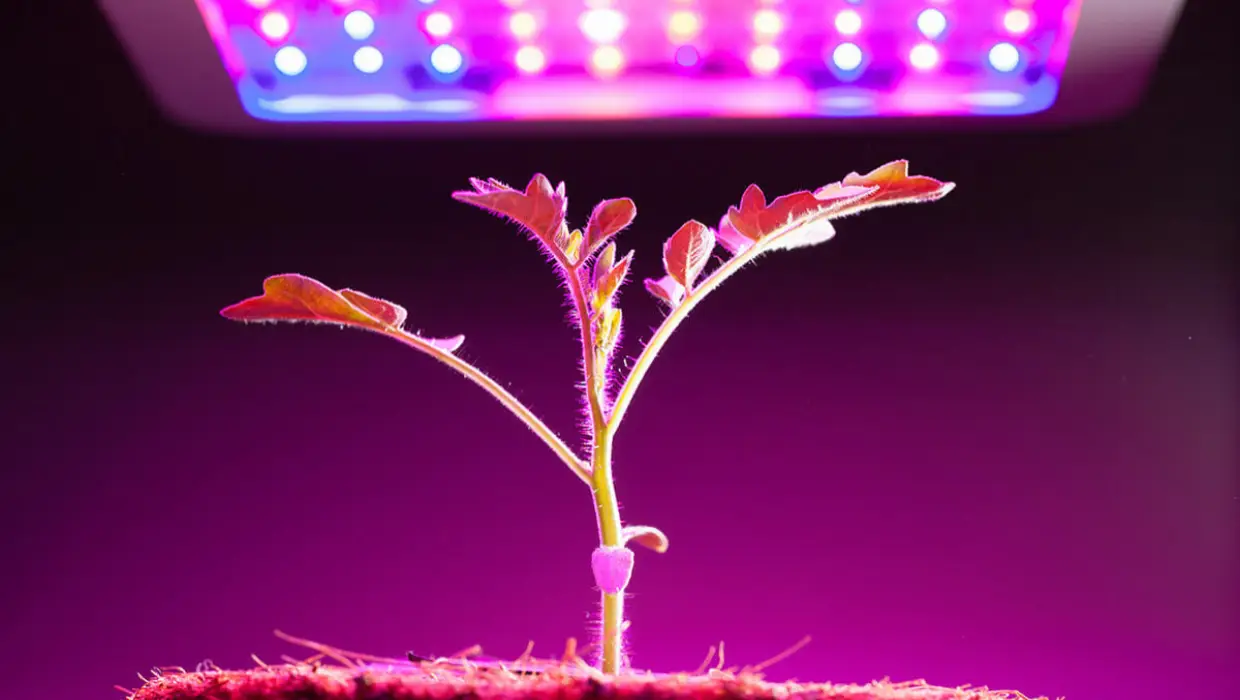
The phytochrome, a light detector found in plants, regulates a variety of processes related to plant growth, such as seed germination, chlorophyll production, seedling elongation, leaf growth and movement, e tempo de florescimento. It detects light at two different wavelengths: luz vermelha (660 nm), which activates it, and near-infrared (730 nm), which deactivates it. A plant employs phytochrome activity to calculate the duration of the day and then the season since red light prevails in strong sunlight and far red light predominates in shade.
MAIS: Como os diferentes espectros afetam o crescimento da planta?