LEDs mimic the lighting properties of sunlight by using semiconductor materials. The two charge states of these semiconductors are positively charged (“gat”) en negatief geladen (“elektron”). These holes and electrons clash when an adequate voltage is provided, starting a process known as recombination. Energy is released in the form of photons as a result of this collision. This light is absorbed by chlorophyll in plants, and photosynthesis is then used to transform the light energy into carbohydrates.
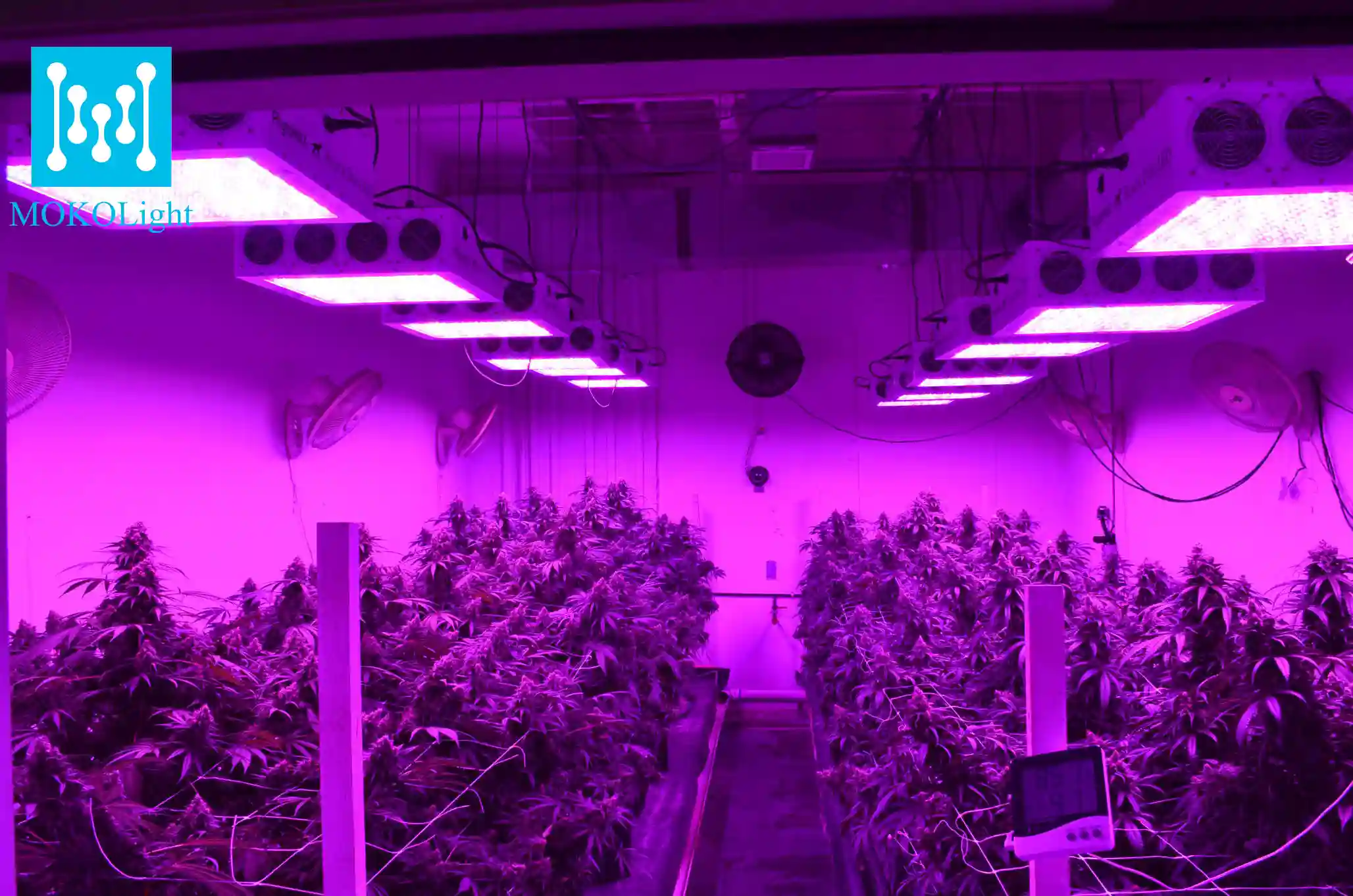
LED grow lights are made to emit wavelengths of light that are necessary for photosynthesis, zoals rood en blauw licht, in order to promote plant development. From seedlings to blooming and fruiting, these particular wavelengths play a key role in the different stages of plant development. LED grow lights are a preferred option for indoor gardening and commercial plant growing because of their excellent efficiency in fostering healthy plant growth and flexibility in the lichtspectrum they generate.